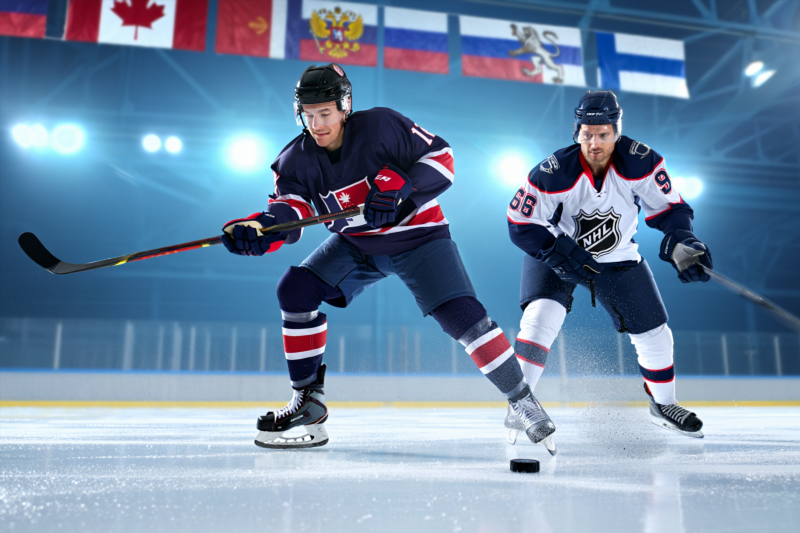
How International Hockey and NHL Vary Significantly
Understanding the differences between international hockey and the NHL is essential for fans, analysts, and players eager to deepen their appreciation of the sport. While both leagues showcase high-level ice hockey, their distinct rules, gameplay styles, and organizational structures create unique viewing and playing experiences. This article explores these key differences to enhance your understanding and enjoyment of hockey on a global scale.
Key Variations in Rules and Gameplay
1. Offside and Icing Rules
- International Hockey (IIHF): Implements a “two-line pass” rule that limits long passes across two blue lines, affecting pacing and offensive strategies. Offside rules are strictly enforced, with some leniency depending on the tournament.
- NHL: Uses the “one-line pass” rule, allowing longer passes that can accelerate gameplay. The offside call is more strictly enforced, contributing to a faster, more physical game.
2. Game Structure and Periods
- International Hockey: Consists of three 20-minute periods with a 15-minute intermission. Some tournaments utilize 10-minute overtime periods followed by shootouts if tied.
- NHL: Also features three 20-minute periods, but overtime includes a 5-minute, 3-on-3 sudden death format, leading to faster resolution in case of ties.
3. Penalties and Power Plays
- International Hockey: Penalizes players with 2-minute minor penalties or 5-minute major penalties, with less physical contact tolerated. Power play opportunities are fewer and shorter.
- NHL: Has a more aggressive stance on physicality, with detailed penalty structures and longer power plays, often making special teams a critical aspect of the game.
Gameplay Style and Strategy
1. Physicality and Contact
- International Hockey: Generally emphasizes skill and quick puck movement, with restrictions on body checking. The game tends to be less physically aggressive.
- NHL: Known for its “gritty” style, incorporating body checking, fights, and a physical approach that impacts game flow and team strategies.
2. Tempo and Pacing
- International Hockey: Exhibits a more deliberate pace with emphasis on precise positioning and tactical plays.
- NHL: Features rapid transitions, fast-paced plays, and continuous pressure, appealing to fans who love high-energy action.
Organizational and Structural Differences
| Aspect | International Hockey (IIHF) | NHL |
| League Structure | Organized by the International Ice Hockey Federation (IIHF) | Comprised of 32 teams across North America, governed by the NHL |
| Season Duration | Shorter seasons with international tournaments and championships | Longer regular seasons (82 games) with playoffs |
| Player Eligibility | Often features a mixture of amateur and professional players from varied nationalities | Primarily North American players and international stars signed to NHL teams |
| Championships | World Championships, Olympic Winter Games, and other tournaments | Stanley Cup Playoffs, All-Star Game, and annual championships |
Why These Differences Matter to Fans and Players
Understanding these divergences allows fans to appreciate the unique qualities of each league, whether enjoying international tournaments like the World Championships or following the NHL’s high-stakes playoffs. For players, adapting to different rules can influence training focus, style of play, and strategic thinking.
Enhancing Your Hockey Enjoyment
- For Fans: Recognize the distinct pace and style of each league to better interpret game strategies and player performances.
- For Aspiring Players: Tailor your training based on the league’s emphasis—whether it’s physicality in the NHL or skill-focused play internationally.
- For Analysts: Use this understanding to analyze game statistics and predict gameplay trends across leagues.
Frequently Asked Questions (FAQs)
Q: Can players switch between international hockey and the NHL easily? A: Transitioning requires adapting to different rules and playing styles. Some players excel in both, but many adapt their skills specifically for the league they play in.
Q: Which league is more physically demanding? A: The NHL generally involves more physical contact, including body checking and fighting, making it more physically intense than most international hockey formats.
Q: How do rules variations impact game outcomes? A: Different rules influence strategies, pacing, and player roles. For example, the NHL’s aggressive style can lead to higher scoring but also risks of injuries, whereas international hockey emphasizes speed and finesse.
By understanding how international hockey differs from the NHL, fans and players can gain a richer appreciation of the sport’s diversity. From variations in rules to gameplay style and league organization, these differences shape the character of each competition and contribute to the global appeal of ice hockey. Dive deeper into each league’s intricacies to enjoy the sport more fully and stay ahead with expert insights on Moleanos Hockey Hub—a major portal dedicated to hockey news, game previews, standings, analytics, and more.